Best Ways to Collect Rent in 2026: Ranked

There’s no point in owning property and dealing with boilers and lawn care if your tenant’s not going to pay you. That’s why choosing the right rent collection method matters—you want something that’s easy for your tenants, minimizes fees, and actually works when you need it to.
The challenge? Every rent collection method has tradeoffs. Apps like Zelle and Venmo are instant but have daily limits that are often lower than monthly rent. ACH is reliable but takes time and hassle to set up. Property management software can be convenient but usually comes with fees. Traditional checks are free but slow.
This guide ranks the most common rent collection methods from best to worst, with honest assessments of what actually works in 2026. We’ll cover the limits, risks, and gotchas you need to know before choosing.
Quick Answer: What’s the Best Way to Collect Rent?
For most landlords: ACH transfer (free, reliable, can automate, no daily limits)
Runner-up: Zelle (instant, free, but has limits and risks)
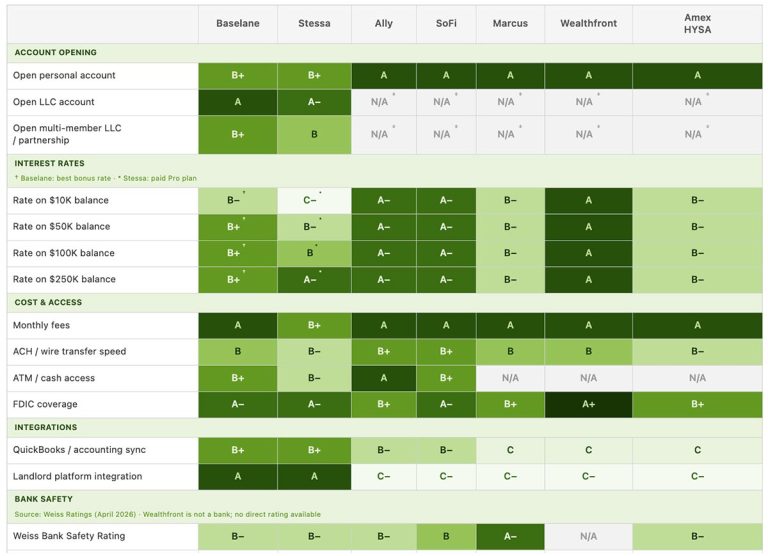
For tech-savvy tenants: Property management software like Stessa, Baselane, or TurboTenant (free for landlords, tenants often pay a small fee)
Avoid: Venmo (violates TOS for business use), Cash (no paper trail), PayPal (confusing fees)
The reality: There’s no perfect solution. ACH is the most reliable for high-rent properties. Zelle works great if your rent is under your tenant’s daily transfer limit. Property management software might be best if you want automation and don’t mind that your tenants are asked to pay a small processing fee.
Rent Collection Methods: Quick Comparison
| Method | Cost | Speed | Limits | Automated | Best For |
|---|---|---|---|---|---|
| ACH | Free | 1-3 days | None | Yes | High-rent properties, set & forget |
| Zelle | Free | Minutes | $2.5-$5K per day* | No | Low-mid rent, reliable tenants |
| Property mgmt software | Tenant pays fees | 2-5 days | Varies | Yes | Multiple properties, paper trail |
| Check | Free | 3-7 days | None | No | Traditional tenants, backup method |
| Venmo | Free (friends) / 3% (business) | Minutes | $299.99-$20K/week** | No | Small amounts only (violates TOS) |
| Cash App | Free (personal) / 2.75% (business) | Minutes | $1,000/week*** | No | Small amounts only |
| PayPal | 0-3.49% | Minutes-days | Varies | Possible | Not recommended |
| Cash | Free | Instant | None | No | Last resort only |
*Varies by bank; some as low as $2,500/day
**$299.99/week unverified, $19,999.99/week verified, but business use prohibited
***$1,000/week for unverified accounts
Ranked: Best to Worst Ways to Collect Rent
🥇 #1: ACH Transfer (Best Overall)
Our take: This is the most reliable, professional rent collection method. No fees, no system-wide limits (individual banks/accounts may have limits), and you can set it up once and forget about it. The Automated Clearinghouse Network (ACH) is one of the biggest US-based payment networks and nearly all banks participate.
How it works: Your tenant initiates a bank-to-bank transfer using your account and routing number. They can typically set it up as a recurring payment that happens automatically every month, which delivers reliable monthly rent deposits with no further action required by either party.
Pros:
- ✅ Free for both parties
- ✅ No universal transaction limits (unlike Zelle/Venmo)
- ✅ Can be automated by tenant (set and forget)
- ✅ Professional and reliable (used by businesses for decades)
- ✅ Paper trail for tax records
- ✅ Works for any rent amount (no daily/weekly limits)
Cons:
- ❌ Takes 1-3 business days to process (not instant)
- ❌ Initial setup requires sharing account/routing info
- ❌ Tenant controls timing and amount
- ❌ No built-in late fee mechanism
- ❌ Can’t refuse payment once initiated
Transaction limits: Varies by bank (request limit increase if needed)
Best for: Properties with rent over $2,500/month, landlords who value reliability over immediate access to funds, more professional portfolio operations.
Typical set up steps:
- Provide tenant with your bank account number and routing number
- Tenant logs into their bank’s online banking
- Tenant adds you as a payee/bill pay recipient
- Tenant sets up recurring monthly transfer
Pro tip: Some banks offer Bill Pay which lets tenants send payments without knowing your account number. The bank mails you a check or does ACH on their behalf.
🥈 #2: Zelle (Best for Speed, But Has Limits)
Our take: Zelle is fantastic when it works—instant, free, easy. But daily limits and lack of recourse for errors make it risky and potentially frustrating for high-rent properties or unreliable tenants.
How it works: Direct bank-to-bank transfer using email or phone number. Money arrives in minutes.
Pros:
- ✅ Instant transfer (minutes, not days)
- ✅ Free for both parties
- ✅ No middleman (bank-to-bank)
- ✅ Most banks participate (check zelle.com/get-started)
- ✅ Simple for tenants (just need your email or phone)
Cons:
- ❌ Daily limits often too low for rent ($2,500-$5,000/day depending on bank)
- ❌ No recourse if tenant sends to wrong email/phone (money is GONE)
- ❌ Can’t refuse payment (tenant can send partial payments to delay eviction)
- ❌ No late fee mechanism
- ❌ No fraud protection
- ❌ Can’t be automated by tenant
Example transaction limits:
- Bank of America: $3,500/day
- Chase: $2,000/day (can request increase to $5,000)
- Wells Fargo: $2,500/day
- Varies widely by bank and account type
Best for: Rent under $2,500/month, reliable tenants who pay on time, landlords who value speed and need immediate access to rent funds.
Major risk: If tenant accidentally sends rent to wrong email/phone, there’s zero recourse. They’re out the money AND still owe you rent. This has happened so extra vigilance is required to get it right every time.
Our recommendation: Great when rent is less than your tenant’s daily transfer limit. For higher rents, use ACH instead.
2026 Note: The standalone Zelle app has been retired in favor of Zelle transfer options embedded directly in member banks’ apps and websites. Most banks participate in Zelle’s network so if your tenant has a bank account, it’s likely they can pay with Zelle.
🥉 #3: Property Management Software (Best for Organization)
Options: Online platforms like Stessa, Baselane, TurboTenant, Avail, and Apartments.com all offer rent collection services. This service is usually free for landlords, while tenants may pay fees that vary widely based on their chosen payment method.
Our take: These platforms offer more than just rent collection—expense tracking, maintenance requests, lease templates, tax readiness, document signing, and more. Depending on your overall needs, it may be worth also setting up rent collection through one of these online platforms.
How it works: The tenant typically creates an account on the platform, connects their bank account online, and then initiates payment through the platform. They can often set up a recurring ACH rent payment if desired. Some platforms charge tenants a processing fee ($3-5/month or 2.75+% for credit card payments, for example).
Pros:
- ✅ Automated recurring payments
- ✅ Late fee reminders (some platforms)
- ✅ Expense tracking for tax readiness
- ✅ Maintenance request portal
- ✅ Digital lease signing
- ✅ Can accept credit cards (if tenant wants to pay fee)
- ✅ Professional paper trail
Cons:
- ❌ Processing time: 1-5+ business days
- ❌ Some charge tenants fees (may reduce goodwill)
- ❌ Learning curve for tenant
- ❌ Adds another account to manage
- ❌ Platform risk (fees could change)
Costs (as of 2/14/26):
- Stessa: Free for landlords, free for tenants (ACH), 2.99% for credit cards
- Baselane: Free for landlords, $1.50/tenant for ACH, 2.99% for cards
- TurboTenant: Free plan available, tenant pays $2.50-3.50 for ACH
- Avail: Free, tenant pays $2-5 for ACH
Best for: Landlords with multiple properties, those who want organization and automation, tech-savvy landlords and tenants.
#4: Check (Reliable Backup)
Our take: Checks have been around a long time, and there’s a reason: no fees! When the dollar amounts are large, there’s a strong incentive to make sure there’s no middleman. There’s also a certain symmetry in checks: the tenant controls how much and when to pay and the landlord has total control over accepting or refusing payment, depending on the circumstances.
The biggest downside to accepting rent payment by check is the proverbial, “the check’s in the mail.” It’s hard to know if your tenant’s late again or if the Postal Service is up to its usual tricks.
Pros:
- ✅ No fees for anyone
- ✅ You control acceptance (can refuse partial payments)
- ✅ Paper trail (physical record)
- ✅ No limits on amount
- ✅ Older tenants may prefer it
- ✅ Works when tech fails
Cons:
- ❌ Slow (3-7 days including mail time)
- ❌ “Check’s in the mail” excuse
- ❌ Requires physical deposit (bank visit or mobile deposit)
- ❌ Can bounce (insufficient funds)
- ❌ Can be stopped by tenant
- ❌ Not particularly convenient for anyone
- ❌ Stamps are getting expensive!
Best for: Backup method, older tenants uncomfortable with technology, or small-town rentals where everyone knows everyone.
Pro tip: Require checks to be received by the first of month, not simply postmarked by the first. This eliminates the mail delay game and helps ensure you get paid on time.
#5: Venmo (Popular But Problematic)
Our take: Venmo is great for splitting dinner bills. It’s terrible for rent collection and technically violates their terms of service.
How it works: P2P payment app owned by PayPal. You can send money to virtually anyone using their phone number or username.
Pros:
- ✅ Instant transfer
- ✅ Free (for friends/family)
- ✅ Popular with younger tenants
- ✅ Easy to use
Cons:
- ❌ Violates terms of service (rent is a business transaction)
- ❌ Weekly limits may be too low ($299.99/week unverified, $19,999.99/week verified)
- ❌ Account can be frozen for business use
- ❌ 3% fee if used for “goods and services” (correct category)
- ❌ No recourse if something goes wrong
- ❌ Social feed shows payments (privacy issue)
- ❌ Can’t automate
Transaction limits:
- Unverified account: $299.99/week
- Verified account (ID uploaded): $19,999.99/week
- Bank transfer: $19,999.99/week
The TOS problem: Venmo’s User Agreement explicitly states it’s for “personal, non-commercial use only.” Rent collection is commercial use. If Venmo catches on, they can freeze your account.
Best for: Honestly? Nothing. We don’t recommend using Venmo for rent.
Our recommendation: If your tenant insists on Venmo and rent is low ($1,000-1,500), you might get away with it for a while. But we don’t recommend it. Use ACH or Zelle instead.
#6: Cash App (Same Problems as Venmo)
Our take: It’s popular with younger demographics but has low limits and unclear terms of service around business use.
Pros:
- ✅ Instant transfer
- ✅ Free for personal use
- ✅ Easy to use
- ✅ Bitcoin option (if you’re into that)
Cons:
- ❌ $1,000/week limit for unverified accounts (useless for most rent)
- ❌ $7,500/week limit for verified accounts
- ❌ 2.75% fee for business transactions
- ❌ TOS unclear about business use
- ❌ No automation
- ❌ Account can be frozen
Transaction limits:
- Unverified: $250/transaction, $1,000/week
- Verified: $7,500/week
- Unverified limit is too low for most rent payments
Best for: Nothing. The limits and unclear terms of service regarding business use make it impractical and risky for paying rent.
#7: PayPal (Confusing and Expensive)
Our take: PayPal has been around forever but it’s still confusing to use, fees are high, and the interface is clunky and full of annoying advertisements. Better options exist.
The fee confusion:
- Friends and Family: Free, but technically not for business use
- Goods and Services: 3.49% + $0.49 (correct category for rent)
Cons:
- ❌ High fees if used correctly (3.49%)
- ❌ Confusing interface
- ❌ Violates TOS if you use free option for rent
- ❌ Can take days to transfer to bank
- ❌ Customer service is not awesome
Our recommendation: Just don’t use PayPal to pay or accept rent. Use ACH, Zelle, or property management software instead.
#8: Property Manager (Expensive Convenience)
Our take: Once you’ve outsourced property management to a PM, rent collection comes with the territory. But remember that you’re typically paying 8-12% of rent for this service, so don’t hire a PM just because you can’t find a better way to collect the rent!
Pros:
- ✅ Completely hands-off
- ✅ PM handles late payments, fees, follow-up
- ✅ Professional collection process
Cons:
- ❌ Expensive (8-12% of monthly rent)
- ❌ No control over collection method
- ❌ No direct tenant relationship
- ❌ PM takes cut before you see money
Best for: Landlords with multiple properties, absentee owners, those who value time over money and are looking to expand their portfolios.
Cost example: $2,000/month rent × 10% PM fee = $200/month = $2,400/year just for rent collection (plus other PM services)
See our guide on property manager fees for more.
#9: Cash (Last Resort Only)
Our take: Cash should be your absolute last resort. It can create safety issues in certain situations and also creates plenty of accounting headaches (no paper trail).
When you might use it:
- Tenant has no bank account
- Tenant is unbanked
- Emergency situation
Cons:
- ❌ Safety risk (carrying large amounts of cash)
- ❌ No paper trail (he said/she said disputes)
- ❌ Hard to track for taxes
- ❌ No record of payment
- ❌ Requires in-person meeting
- ❌ Can be stolen
If you must accept cash:
- Always provide receipt (two copies—one for each of you)
- Deposit immediately (creates bank record)
- Count in front of tenant (avoid disputes)
- Meet in public place (never at your home)
- Consider bringing someone for safety
Best for: Absolute emergencies only.
What We Recommend
For rent under $2,500/month: Use Zelle if your tenant is reliable. It’s instant and free.
For rent over $2,500/month: Use ACH to avoid daily limit issues. Set up auto-pay and forget about it.
For multiple properties or organization: Use property management software like Stessa or Baselane. Free or cheap, and you get expense tracking and tax reports.
For backup: Always have a check option available for when technology fails.
Avoid: Venmo, Cash App, PayPal, and cash unless absolutely necessary.
FAQ
ACH transfers through your bank are the safest. They’re free, create a clear paper trail, have no transaction limits, and can be automated. Property management software (Stessa, Baselane) is also very safe and adds organizational features. Avoid cash entirely for safety reasons.
Technically no—Venmo’s terms of service restrict it to “personal, non-commercial use only,” and rent collection is a business transaction. If Venmo discovers you’re using it for rent, they can freeze your account. Additionally, weekly limits ($299.99 unverified, $19,999.99 verified) are often too low for monthly rent payments. Use ACH or Zelle instead.
Yes, and it varies by bank. Common limits are $2,500-$5,000 per day. Chase allows $2,000/day (can request increase to $5,000). Bank of America allows $3,500/day. Wells Fargo allows $2,500/day. If your monthly rent exceeds your bank’s daily Zelle limit, use ACH instead.
Generally no—most states prohibit charging tenants fees for paying rent via standard methods like check or ACH. However, you can offer premium payment options (credit card) where the tenant voluntarily pays the processing fee. Some property management software charges tenants $2-5 for ACH convenience, which tenants agree to when using the platform. Check your state laws.
You’re in trouble. Zelle transfers are instant and irreversible. If your tenant sends rent to the wrong email or phone number, the money is gone with zero recourse. They’re out the money AND still owe you rent. This is why we recommend ACH for high-rent properties—it’s reversible if caught quickly.
Generally no. Credit card processing fees are 2.75-3.5%, which on a $2,000 rent payment is $55-70/month. If the tenant wants to pay with a credit card (for points/rewards), they should pay the processing fee, not you. Some property management software offers this option where the tenant pays the fee.
ACH is the best method for automation. Your tenant sets up a recurring monthly transfer through their bank’s bill pay system. Property management software (Stessa, Baselane, TurboTenant) also offers automated recurring payments. Zelle currently doesn’t support recurring payments—tenant must manually send each month.
Zelle (minutes) and Venmo (minutes) are fastest but have limits and risks. For amounts over $2,500, ACH is your fastest reliable option (1-3 business days). Property management software typically takes 2-5 business days. Checks take 3-7 days including mail time.
Don’t Forget About Renters Insurance
While we’re on the topic of tenants paying rent, it’s worth noting that most landlords now require renters insurance. It’s affordable and can help your tenant stay current in the event they suffer an insurable loss or accident on the premises.

Written by Devin Redmond
Devin is an independent investor and freelance writer focused on the real estate industry. He previously worked at Jones Lang LaSalle, Hines Interests, and Roofstock. He actively acquires and manages residential properties across California and Hawaii.