

Best Real Estate Investing Books
The rental property market in 2026 looks nothing like it did five years ago. Interest rates that once seemed impossible are now the new normal. Insurance premiums have doubled in some markets. Property values have plateaued or even declined in previously red-hot metros. And yet, experienced investors continue to find opportunities—because they know that markets cycle, fundamentals matter, and there’s a strategy for every moment.
This list of the best real estate investing books isn’t really for beginners looking for their first duplex. If you’re reading this, you’ve likely already closed deals, weathered some challenging tenants, and learned the hard way that pro-formas don’t always pan out. These books promise to sharpen your edge, challenge your assumptions, and help you develop the strategic depth to thrive when everyone else is just trying to survive.
Whether you’re optimizing your tax strategy, pivoting to new markets, or trying to scale your portfolio in a high-rate environment, these 10 books belong on your shelf.
Why Read The Best Real Estate Books in 2026?
The investors winning today aren’t following the same playbook that worked in the 2020-2022 boom. They’re adapting. They’re studying historical cycles. They’re finding creative financing structures that pencil when traditional mortgages are expensive.
Books won’t replace the lessons you learn from actual deals, but they can often compress decades of experience into a few hundred pages. That matters when market conditions shift as quickly as they have over the past few years.
Let’s get into it.
1. The Intelligent Investor by Benjamin Graham
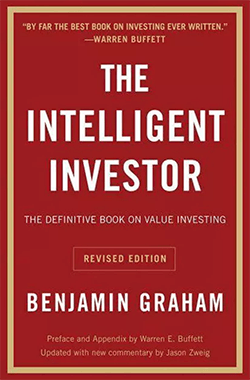
Why it still matters in 2026: This 1949 book about stock market investing remains Warren Buffett’s favorite for a reason—and its principles translate directly to rental property investing. The read can be a grind at times since it was written in a different era, but Graham’s concept of “margin of safety” is more relevant than ever when rents are stagnant and interest rates are sticky-high.
The book’s focus on long-term value investing, emotional discipline, and understanding market cycles will help you avoid the FOMO that’s destroyed so many portfolios. When someone says something like, “just buy because values always go up,” Graham’s defensive investor principles will help keep you grounded.
Pay special attention to the chapters on why price matters and how to distinguish between investing and speculation. That distinction just might save you from a big mistake someday.
For a more detailed analysis of what Benjamin Graham can teach us about real estate investing, check out Douglas Dowell’s quick analysis.
Best for: Investors who need a philosophical reset after chasing too many bad deals.
2. What Every Real Estate Investor Needs to Know About Cash Flow by Frank Gallinelli

Why it’s essential: Academics don’t often write bestselling books about real estate investment, but Columbia University professor Frank Gallinelli did. If you’re still intimidated by the mysterious inner workings of DCF models and IRR calculations, this Columbia University professor breaks it all down.
Now in its third edition, Gallinelli’s book transforms abstract financial concepts into practical decision-making tools. This is especially critical in 2026 when higher interest rates have made the spread between cap rates and mortgage rates razor-thin. Understanding how to run the numbers properly—not just accepting what your property manager tells you—separates serious investors from amateurs.
The book includes detailed examples, Excel templates, and step-by-step guides for analyzing deals. If you’ve been making investment decisions based on gut feel rather than rigorous analysis, get ready to see the world in a whole new way.
Best for: Investors who want to master financial modeling and make data-driven acquisition decisions.
3. Rich Dad Poor Dad by Robert Kiyosaki

Why it’s still relevant: If you can set aside the cacophony of noise and debate around one of the most popular personal finance books of all time, you just might get something valuable out of Rich Dad Poor Dad.
Yes, the “rich dad” might be fiction. Yes, the book takes creative license with definitions. Who cares? This book has inspired millions of people to think differently about money, work, and building wealth through assets that generate cash flow.
If you’ve been grinding as a landlord for years and need a reminder of why you started this journey—or if you’re considering whether to scale or exit—Kiyosaki’s message about working for assets rather than trading time for money still lands close to home.
Don’t read this expecting a step-by-step guide. Read it as a mindset reset and philosophical framework for building wealth.
Best for: Experienced investors experiencing burnout who might want to reconnect with their original motivation.
4. The Book on Rental Property Investing by Brandon Turner

Why experienced investors still need it: It takes guts to start the title of your book with the phrase, “The book on…“. That implies that it’s some sort of definitive guide to the subject matter and perhaps even the only book you’ll need. Fortunately for many DIY rental property owners, Turner’s tome comes about as close as any to delivering on that promise.
Turner pulls no punches about what rental property investing actually requires—the late-night maintenance calls, the tenants who destroy your property, the deals that don’t pencil, and the market cycles that test your resolve.
Even if you’ve been investing for years, Turner’s practical systems for finding deals, analyzing markets, managing properties, and scaling a portfolio offer fresh perspectives. The book is based on hundreds of rental units and dozens of rehabs, so the advice comes from real-world experience, not theory.
The 2026 rental market requires operational excellence. Turner’s frameworks for tenant screening, maintenance systems, and portfolio management are battle-tested and immediately actionable.
Best for: Investors who want to professionalize their operation and build scalable systems.
5. Buy, Rehab, Rent, Refinance, Repeat by David Greene
Why it’s crucial right now: The BRRRR strategy has become a staple of value-add investing, and Greene’s book is the definitive guide. In a market where cash-flowing deals are harder to find, the ability to force appreciation through intelligent rehabs is more valuable than ever.
Greene walks through the entire BRRRR cycle—finding distressed properties, estimating rehab costs accurately, building relationships with contractors, managing projects, getting the refinance through, and then repeating the process. He also addresses the common mistakes that blow up BRRRR deals like over-improving for the neighborhood, missing hidden structural issues, or getting denied for refinancing.
In 2026, when interest rates make traditional buy-and-hold harder, BRRRR offers a path to build equity and still have enough cash left over for your next deal.
Best for: Investors looking to scale with limited capital through value-add strategies.
6. The Millionaire Real Estate Investor by Gary Keller
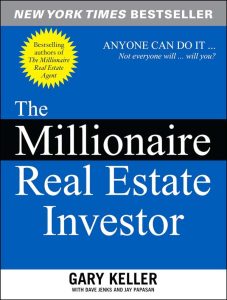
Why it’s a classic: Keller’s book focuses on the mindset, models, and systems that separate six-figure investors from millionaire investors. It’s divided into three sections: Think a Million, Buy a Million, and Own a Million.
This isn’t a tactical manual—it’s a strategic roadmap for building serious wealth through real estate. Keller breaks down how to think about market cycles, build teams, structure deals, and compound your gains over decades. The case studies from successful investors provide blueprints you can adapt to your own portfolio.
For experienced investors stuck on a plateau—whether that’s 5, 20, or 100 doors—this book will challenge you to think bigger and build the systems needed to keep climbing.
Best for: Investors ready to scale aggressively and build multi-million dollar portfolios.
7. Bubble in the Sun by Christopher Knowlton

A fascinating and true tale: Knowlton’s book chronicles how developers, speculators, and ordinary people got swept up in the 1920s Florida land boom–a frenzy that ended in spectacular collapse.
This book is a reminder that booms and busts have always been part of real estate. Understanding historical cycles, recognizing warning signs of overheated markets, and maintaining discipline when everyone else is losing their minds are crucial skills.
Plus, it’s just a damn good read—packed with larger-than-life real estate moguls, prohibition-era Miami nightlife, devastating hurricanes, and the breakneck development of South Florida. Who knew non-fiction could be so wildly entertaining?
Best for: Investors who want perspective on market cycles and a friendly reminder that this too shall pass.
8. The Real Estate Game by William Poorvu

Why it transcends trends: In 2026, when AI tools and algorithms flood the market with data, Poorvu’s emphasis on judgment, intuition, and understanding human behavior feels more relevant than ever. The best deals often come from relationships, not listings. The worst disasters come from poor judgment, not bad numbers.
This Harvard Business School professor’s book, first published in 1999, focuses on the human element of real estate investing. While everyone else obsesses over spreadsheets and cap rates, Poorvu emphasizes that real estate success depends on people—understanding their motivations, building relationships, and recognizing that market variables are impossible to control.
If you’ve been following someone else’s formula and wondering why results vary, this book will show you that success in real estate requires adapting strategies to your unique situation.
Best for: Investors who want to understand the big picture and stop chasing cookie-cutter strategies.
9. The Book on Tax Strategies for the Savvy Real Estate Investor by Amanda Han and Matthew Macfarland

Why it’s essential: It’s no secret that real estate investing is a tax-advantaged way to make money, yet many investors leave thousands of dollars on the table every year because they don’t understand the rules.
Han and MacFarland are CPAs who specialize in real estate, and their book breaks down everything from basic depreciation strategies to advanced techniques like cost segregation studies, 1031 exchanges, and entity structuring. They also cover how to avoid audits, when to hire specialists, and creative strategies for maximizing deductions.
With higher operating expenses cutting into cash flow in 2026, optimizing your tax strategy is more important than ever. This book will show you how.
Best for: Investors who want to pay less tax legally and build wealth faster through tax optimization.
10. Skip the Flip by Hayden Crabtree
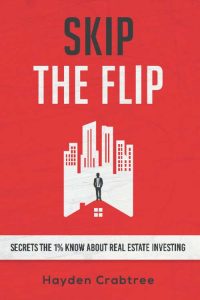
Why it matters for experienced investors: Crabtree’s premise is simple: Why pay capital gains taxes when you can use 1031 exchanges and other strategies to defer taxes indefinitely and build a larger portfolio?
The book dives deep into the “one percent” strategies that sophisticated investors use—1031 exchanges, opportunity zones, Delaware Statutory Trusts, and other vehicles that allow you to scale without getting crushed by taxes. Crabtree also explains how to structure acquisitions to maximize tax benefits and build generational wealth.
In an environment where cash flow is tight, understanding how to leverage tax strategies to reinvest more capital becomes a competitive advantage. This book opens up the curtain to show you how the wealthy stay wealthy.
Best for: Investors with significant equity looking to scale tax-efficiently and preserve more wealth.
Bonus: How Buildings Learn by Stewart Brand

Why architects, developers, and investors love it: Brand’s book is about adaptation—how buildings change over time and why some structures age well while others become obsolete.
This book will change how you look at properties. You’ll start noticing which buildings have “good bones” for future adaptation and which ones are locked into rigid uses that won’t survive market changes. It’s a masterclass in long-term thinking that transcends typical real estate advice.
Kevin Kelly, co-founder of Wired magazine, calls this one of his favorite books of all time. Read it and you’ll understand why.
Best for: Investors who think in decades, not quarters, and want to build portfolios that adapt to changing markets.
Keep Learning, Keep Growing
The rental property market will continue to evolve. Interest rates will shift. New regulations will emerge. Markets that were hot will cool, and overlooked markets will heat up. The investors who thrive won’t be the ones following last year’s playbook—they’ll be the ones continuously learning, adapting, and staying ahead of the curve.
These books won’t give you a paint-by-numbers formula for success. But they just might sharpen your strategic thinking, challenge your assumptions, and give you frameworks for making better decisions in any market.
Want more resources like this? Join thousands of experienced landlords who get exclusive spreadsheets, market analysis, tax insights, and other useful treats delivered straight to their inbox. Join The Bump newsletter and level up your investment game.